
Student engagement remains a persistent challenge in public education. According to the National Center for Education Statistics (NCES), 26% of public school leaders reported that a lack of focus or inattention from students had a severe negative impact on learning during the 2023–24 school year. This signals a broader issue: many students lack motivation, connection, or interest in their daily learning experiences.
The traditional school day, while essential, is not always structured to fully address this challenge. Time constraints, academic demands, and accountability pressures often limit opportunities for deeper exploration, hands-on learning, and student-driven inquiry, which are all critical to building lasting engagement.

Out-of-school time (OST) presents a powerful opportunity to address this challenge. When designed intentionally, district leaders can strategically leverage after-school and beyond-the-bell programs to support district goals related to engagement. This can be accomplished with learning experiences that spark curiosity, build confidence, and keep students meaningfully engaged.
However, district leaders should ensure these programs are not extensions of the school day, but fundamentally different learning environments where students want to show up, want to participate, and ultimately thrive. An effective example of this approach in practice can be seen in the work of AlphaBEST, an after-school and enrichment partner that designs programs around engagement, mindset development, and student-driven learning.
These programs must also prioritize the skills students need to succeed in a rapidly changing world:
Together, these skills move engagement beyond compliance and toward genuine investment in learning. But developing them consistently requires intention and environments that give students the space to explore, take ownership, and engage more deeply with their learning. This is where out-of-school time offers a distinct advantage.
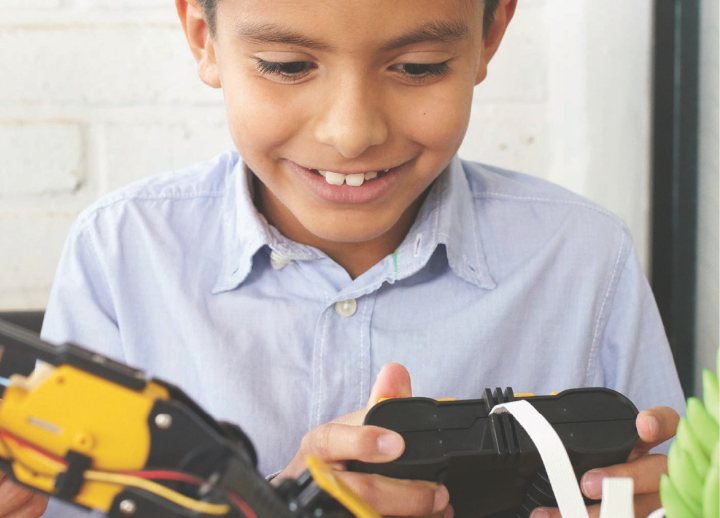
OST’s ability to function as a low-risk learning environment helps increase engagement further. During the school day, students are often expected to produce correct answers quickly and consistently. Time constraints and accountability pressures can limit opportunities for exploration, iteration, and deeper inquiry. As a result, powerful learning experiences that require trial, error, and persistence are often sidelined.
The additional flexibility that after school programs naturally provide allows them to change that dynamic by fostering the concept of productive struggle, where failure can be explored, revisited, and even celebrated. In this environment, students are given the time and space to experience challenges, reflect on them, and iterate without the same level of pressure. That way, students who may typically disengage or become frustrated when faced with obstacles begin to respond differently.
With repeated exposure to cycles of trial, failure, and redesign, students develop the ability to:
Over time, this mindset becomes internalized. What once triggered frustration becomes an opportunity for growth. This is the “luxury” of out-of-school time: the ability to slow down the learning process just enough to allow struggle to become productive and ultimately transformative.
Creating this kind of engagement requires a deliberate approach to program design. Within AlphaBEST’s broader enrichment model, this is supported in part through partnerships with curriculum providers such as Galileo Learning, whose Innovators Process offers a research-informed framework rooted in hands-on, STEAM-based learning.
At its core, this process is built to develop the very skills districts say students struggle with most: persistence through challenge, creative problem-solving, and sustained engagement.
The model centers on a structured yet flexible cycle:
Rather than guiding students step-by-step to a single “right” answer, this approach places them just beyond their comfort zone, also known as the space within their zone of proximal development. Here, productive struggle becomes part of the learning experience.
For example, students might design and build a working puppet theater. After initial instruction, they independently develop solutions, test their designs, encounter setbacks, and refine their work. A curtain that won’t open smoothly or a structure that doesn’t hold becomes an opportunity, not a failure.
This iterative cycle:
Importantly, this kind of deep, iterative learning is often difficult to fully implement during the school day due to time constraints and instructional pressures. OST environments provide the space to engage in this process more fully, allowing students to experiment, reflect, and improve without the urgency of arriving at the correct answer immediately.
The result is not just a finished project, but a learner who is more resilient, more curious, and more confident in their ability to solve problems.

While these principles can be applied in many ways, some district partners are already demonstrating what this looks like in practice. One example of how districts are operationalizing these principles can be seen in the approach taken by AlphaBEST, an after-school and enrichment partner working with school systems across more than 20 states.
AlphaBEST’s model is built around a simple premise: engagement must be intentionally designed. Through structured partnerships with districts, programs are developed to align with local goals while creating environments where students actively choose to participate and persist.
At the core of this approach is a curated enrichment curriculum that prioritizes both student interest and skill development. Rather than focusing narrowly on academic remediation, the model emphasizes a broader definition of learning that integrates cognitive, social, and emotional growth.
This is achieved through a comprehensive “enrichment wheel” that includes:
By offering multiple pathways into engagement, the model ensures that students with different interests and strengths can connect meaningfully with their learning experience.
Importantly, this approach is not disconnected from district priorities. These programs are designed to reinforce key goals—such as engagement, social-emotional learning, attendance, and behavior—while leveraging the unique flexibility of out-of-school time.
The result is a model that does more than fill time after school. It transforms that time into a strategic extension of the district’s broader mission—one that supports the development of confident, capable, and engaged learners.
To learn more, watch our Ed Talk. [On-Demand]
This white paper is based upon the Ed Talk “Designing Engagement: How Specialized Hands-on Learning Builds Confidence and Empowers Students Through Productive Failure.” The white paper and webinar were produced by District Administration and sponsored by AlphaBest.
Ed Talk Speakers:
Dr. Stella Kemp, Senior Director of District Partnerships, AlphaBEST
Matt Noble, CEO, Galileo Learning
Pamela Briskman, Vice President of Education, Galileo Learning
Want a PDF copy of this white paper? Contact us here.